
History
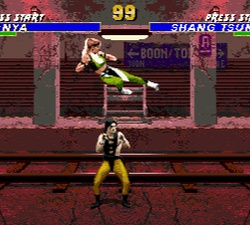
"Mortal Kombat 3" — the MK3 that took the tournament to the city streets. On Sega — the Genesis/Mega Drive — it was the instant party starter: the gong hits, the menu rustles, and someone is already whispering blood codes and hidden tricks. Brute force isn’t enough — timing and dial-a-combos decide it, the new run button shifts the pace, and those gray alleys, the subway, and the Bell Tower where a fall is practically a Fatality. We remember the fire in your fingers and that nerve when you stare at the life bar and wonder if you should risk a Brutality or finish with a stylish Animality. For many, this is where the bond with the roster began: unmasked Sub‑Zero, scream-queen Sindel, baton-toting Stryker, and the Lin Kuei’s cyber ninjas — Sektor, Cyrax, Smoke. And no, it’s not just a game about Fatalities; it’s that blood-soaked tournament you keep coming back to.
The story hooks too: Shao Kahn punches through the barrier and siphons Earthrealm’s souls, and we’re fighting in city streets, not a temple. That sets the vibe — arcade rush and urban gloom. Ports all had their quirks, but the spirit stayed: fast pace, long juggle strings, hidden fighters, cheeky gags like Babality and Friendship, and the eternal “UMK3 or the original?” debate. We’ve put together the series history and context, and the nitty-gritty — Fatality inputs on the Genesis, arcade differences, how to do a Brutality, MK3 secrets, codes and combos, move list, and nods to Sub‑Zero, Nightwolf, Kabal — is easy to cross-check with Mortal Kombat 3 on Wikipedia. Click — and your hand reaches for the controller, just like in front of the TV with a cartridge back in the day.
Gameplay

"Mortal Kombat 3" is that fighter where a round doesn’t start—it detonates. MK3 hooks you with speed: you pop into stance and you’re already surging forward, holding Run, shaving split-seconds. It’s all about imposing your tempo. Sweep the legs, pin them to the corner, snap an uppercut, catch the juggle and never let go. Every clean hit rings like a gong; every whiff is ice in your gut. Call it Mortal Kombat 3, MK, the classic “Mortal”—the point’s the same: the tension clamps down from the first hit to the final frame. With momentum, the screen seems to narrow; when the opponent slips out, it becomes a nerve dance: press in and risk it, or bait the mistake and punish. And nothing beats a pixel-health comeback—your fingers find the beat while your eyes chase every shadow of movement.
The game is generous with treats. Fatalities are cold catharsis; Brutalities are a torrent where fists and feet turn into a drumroll; Babalities and Friendships are that wink after the scrap, when the tension breaks and you want to laugh. Animalities are pure legend now, a bedtime myth for those who believe in the arcade era’s miracles. Combos are tactile here: step, press, micro-pause—and you’re flying. Couch versus melts time: knowing your rival’s habits can matter more than knowing the move list. You’ll want to smother in the corner again, break a block with a throw again, hear that click—and crack a secret. On the Arcade Ladder, every fight is a rung; the higher you climb, the harsher the composure check. In Versus, it’s your read on the player—not button mashing—that decides it. And when the hype takes over, it’s the perfect time to refresh the basics: moves, strats, and the finer points are broken down here — gameplay.